Spreadsheet speed, lasting mahjong records.
Tenn is an iOS app for recording three- and four-player mahjong results at the table and accumulating them as player histories. It puts input speed first, then connects the data to statistics, search, sharing, and backup.
A table you can use without thinking during play.
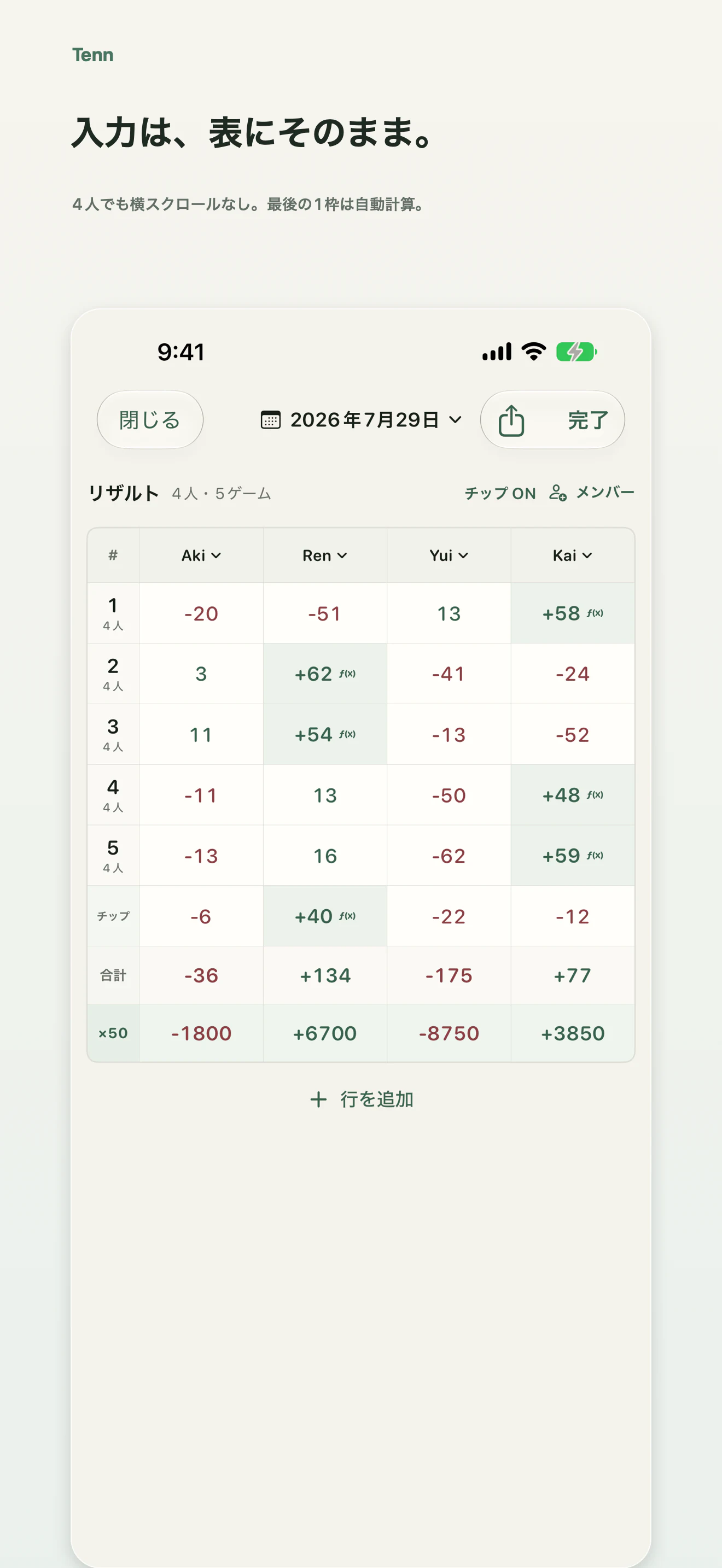
The starting point was not a rich form, but the immediacy of typing into a spreadsheet. A four-player sheet fits without horizontal scrolling, and the final score in each game is calculated automatically so the row totals zero. Minus and clear shortcuts sit directly above the keyboard.
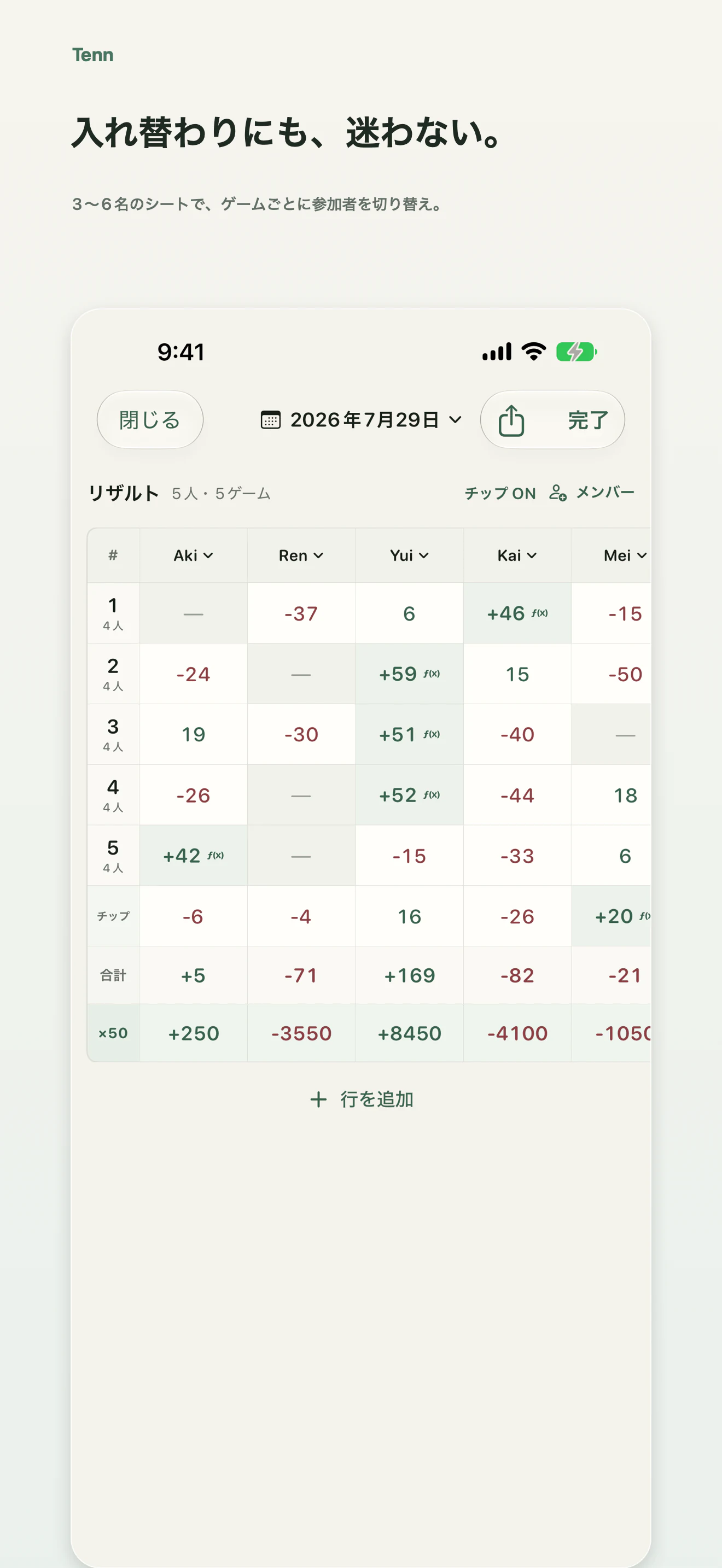
When five or six people rotate through a session, an individual cell can be disabled for the player sitting out. Rankings are calculated only among the three or four active players, so impossible fifth- or sixth-place results never enter the statistics.
Keep the shape of play, not only the final total.
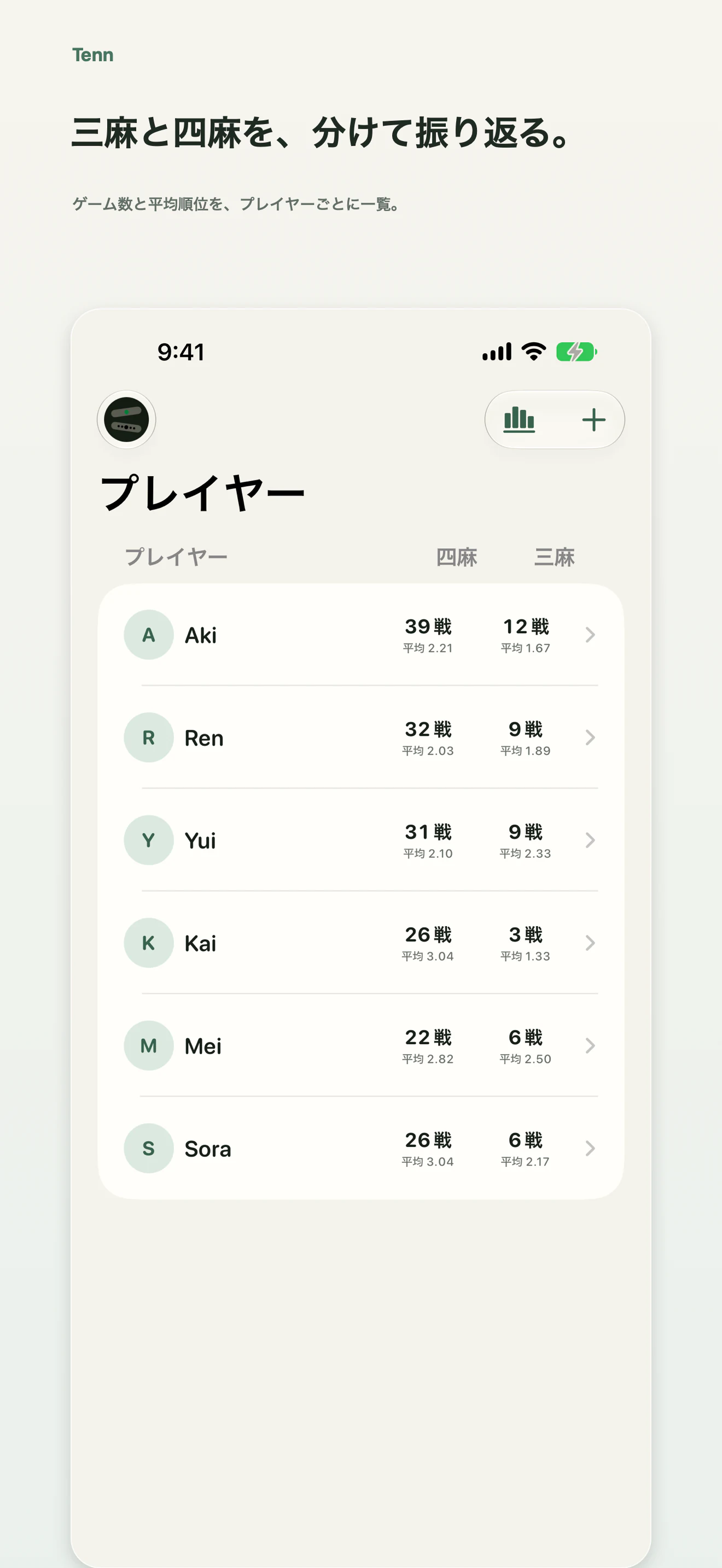
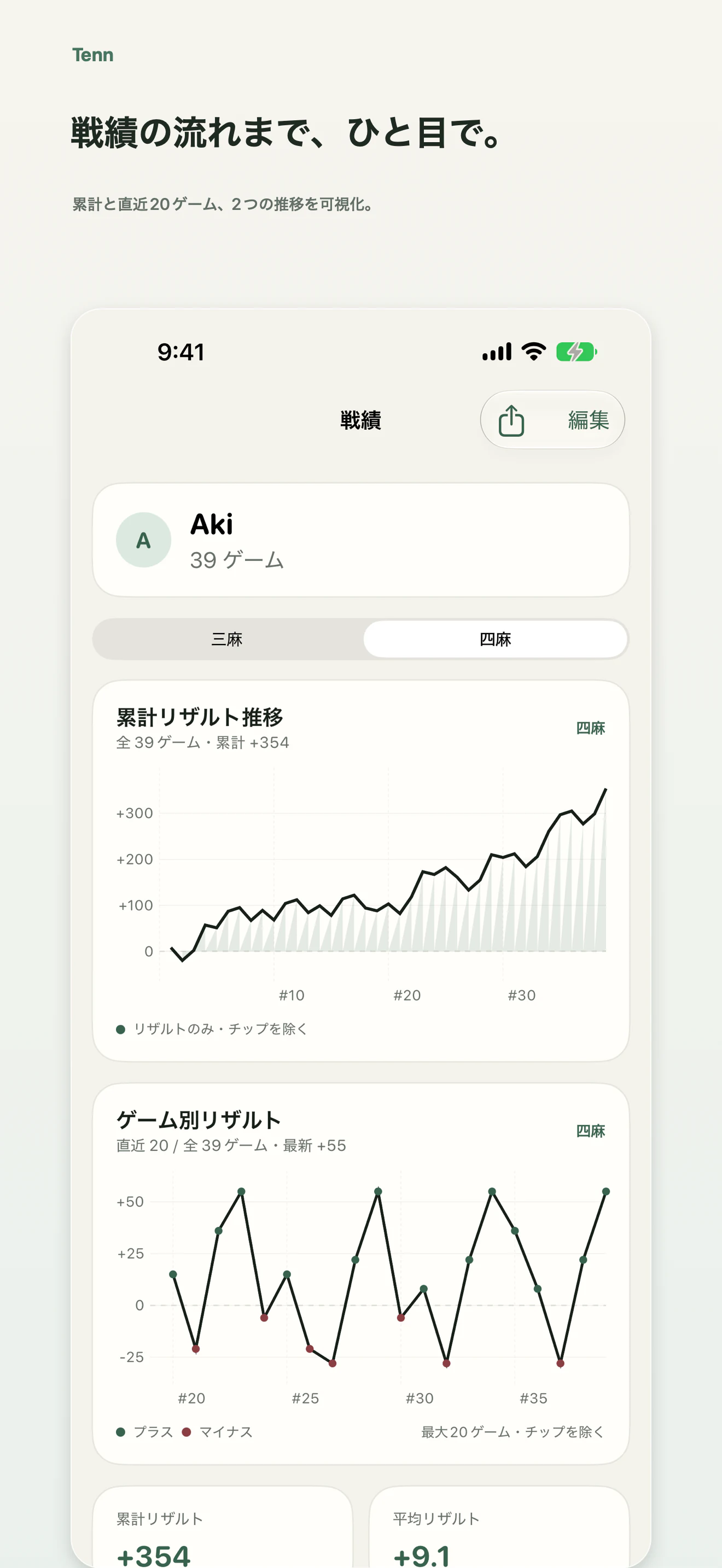
Each player gets games played, average placement, average score, win rate, top-two rate, and cumulative chips. Three- and four-player formats remain separate because they are not comparable. Cumulative results sit alongside a per-game chart limited to the latest 20 games, separating long-term direction from recent volatility.
Features
- Separate three- and four-player records
- Show the latest 20 games in the per-game trend
- Automatically calculate each game and chip row to total zero
Do not trap manually entered data inside the app.
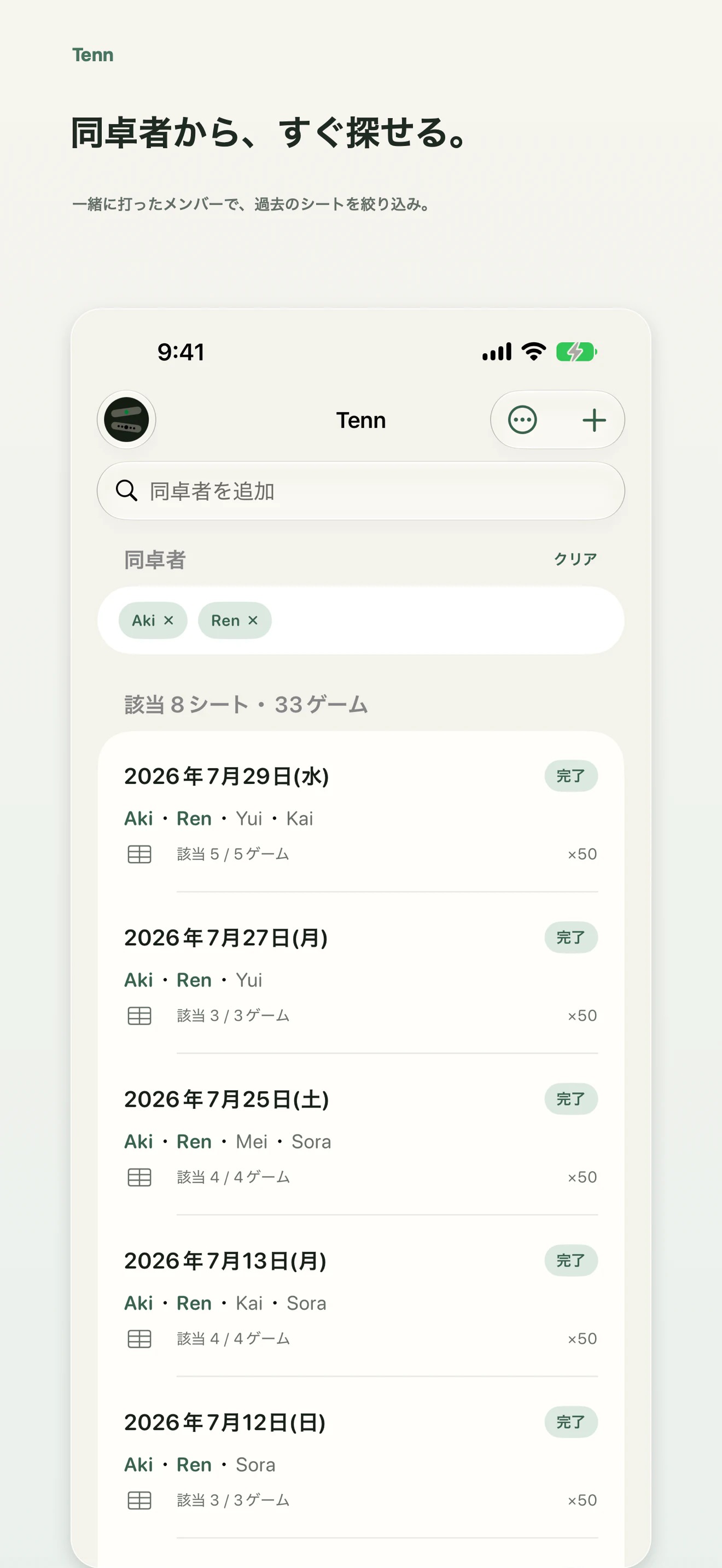
Past sheets can be filtered by player and co-player. Result sheets and player statistics can be shared as images, while every player and game can be exported and re-imported as a JSON backup. Data stays local by default, but remains portable and recoverable by the person who created it.
- Sharing: Export result sheets and player records as images for messaging apps.
- Data ownership: Back up and restore every player and session in JSON.
- Privacy: No account or developer-operated server; entered data stays on the device.
Make a small utility trustworthy enough to keep using.
I designed and built the UI, data model, scoring logic, brand, App Store screenshots, backup flow, and privacy and support surfaces as one system. AI worked as a development partner, while product decisions stayed grounded in mahjong rules and real score-entry behavior — turning a personal tool into a product ready for distribution.